

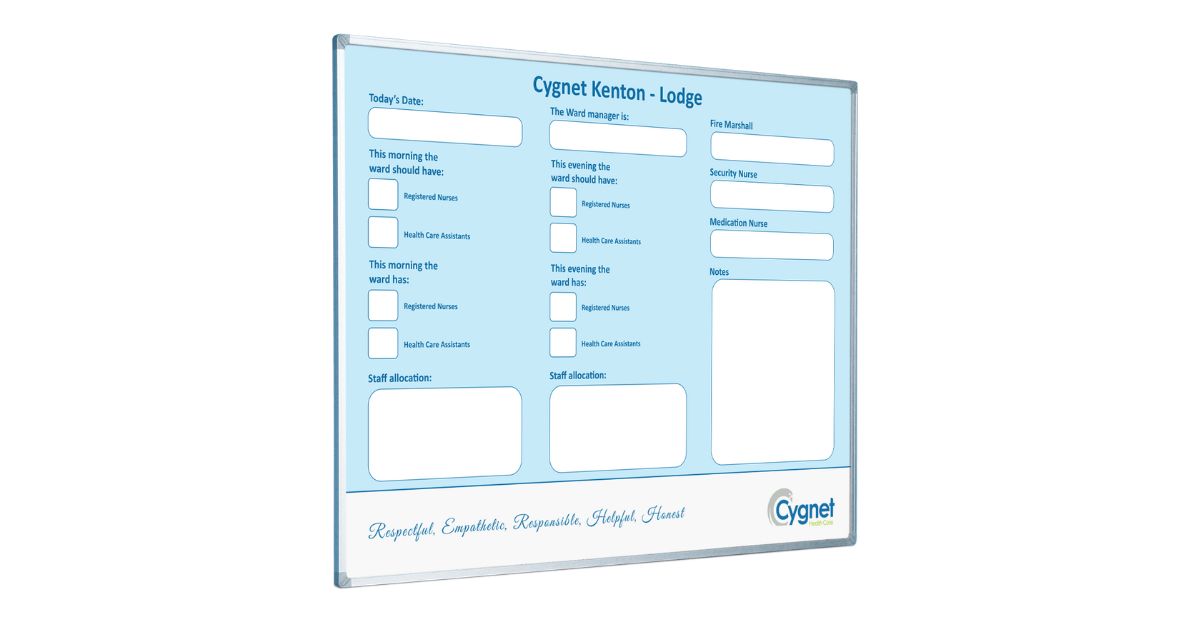
Mental health clinics are environments where clarity, communication, and patient engagement are critical. While we often think of therapy as primarily verbal, visual aids can play a transformative role in treatment and daily operations. One simple, versatile tool that bridges the gap between thought and visual representation is the whiteboard.
Though they might seem like standard office equipment, whiteboards offer a surprising range of applications in therapeutic settings. The benefits of whiteboards in mental health clinics extend far beyond simple note-taking. They foster collaboration, improve organization, and create a shared space for healing.
Enhancing Patient-Therapist Communication
Therapy sessions often involve untangling complicated thoughts, patterns, and histories. Sometimes, words alone aren’t enough to capture the full picture. A whiteboard provides a shared canvas for therapists and patients to externalize their internal struggles.
Visualizing Cognitive Behavioral Therapy (CBT) Models
Cognitive Behavioral Therapy relies heavily on understanding the connection between thoughts, feelings, and behaviors. Drawing out these cycles on a whiteboard can make abstract concepts concrete.
A therapist can map out a specific triggering event, draw arrows to the automatic thoughts that followed, and then link those to emotional and behavioral patterns. Seeing this cycle visually allows patients to step back and observe their habits objectively rather than just feel them.
Mapping Family Dynamics and Relationships
Family systems and social networks are often messy and interconnected. Genograms or relationship maps can become confusing when described verbally. Using a whiteboard allows a clinician to draw out family trees, indicate the nature of relationships with different lines or colors, and identify patterns of conflict or support. It helps patients see their place within a larger system, which can be a powerful moment of insight.
Externalizing Problems
In narrative therapy, a core technique is externalizing the problem or separating the person from their issue. A whiteboard is an excellent tool for this. By writing the problem’s name on the board, perhaps even giving it a shape or character traits, the patient and therapist can look at it together. They can brainstorm strategies to address or manage the problem and list them on the board.
Supporting Group Therapy Dynamics
Group therapy sessions present unique challenges in keeping everyone focused and ensuring all voices are heard. A whiteboard serves as a central focal point that anchors the group’s attention and validates individual contributions.
Collaborative Agenda Setting
Starting a group session by writing the agenda on a whiteboard establishes structure and safety. Group members know exactly what to expect, which can reduce anxiety. Furthermore, asking members what they want to add to the agenda and writing it down publicly validates their needs. It shows that the session is a co-created space.
Brainstorming and Collective Problem Solving
A whiteboard can also facilitate brainstorming sessions where members shout out solutions or coping strategies. Seeing a growing list of options can be incredibly hopeful for anyone feeling stuck. It also prevents the same ideas from being repeated, as they are already visible, encouraging members to dig deeper for new suggestions.
Educational Visuals and Psychoeducation
Many group sessions involve a psychoeducational component, teaching members about diagnoses, medication, or coping skills. A whiteboard allows the facilitator to present information in multiple modalities. They can draw diagrams of the brain, list side effects, or outline the steps of a relaxation technique.
This caters to visual learners who might struggle to retain information delivered only through lectures. It also allows for spontaneous clarification; if a member doesn’t understand a concept, the facilitator can quickly sketch a new explanation.
Improving Clinical Operations and Staff Communication
Behind the scenes, mental health clinics are complex organizations that require seamless coordination. Whiteboards are indispensable for maintaining operational flow and ensuring patient safety.
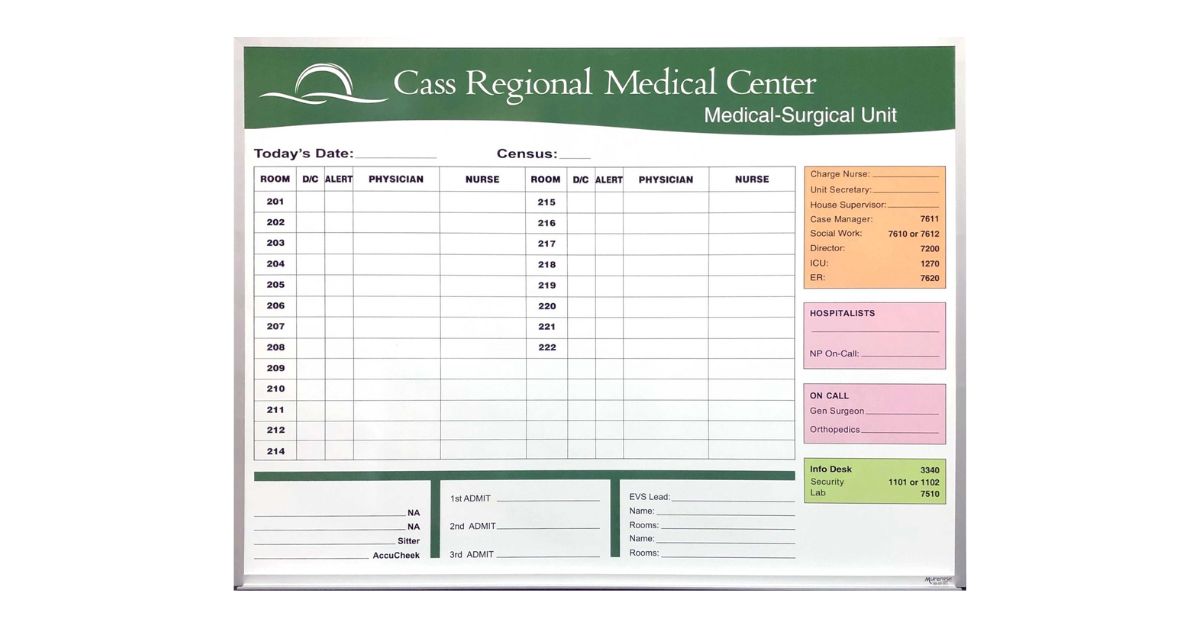
Managing Patient Flow and Bed Status
In inpatient or intensive outpatient settings, bed and patient location statuses change rapidly. An electronic system is essential, but a central whiteboard in the nursing station provides an at-a-glance reference instantly accessible to everyone. Staff can see who is currently in a session, who is out on a pass, and which beds are available for new admissions.
Shift Change and Handoff Communication
Shift changes are critical moments where information can easily fall through the cracks. A whiteboard dedicated to staff communication can capture vital updates that need to be passed on. This might include safety concerns, changes in observation levels, or specific behavioral plans that need consistency across shifts. While detailed notes are documented in the medical record, the whiteboard highlights the “must-know” information that requires immediate attention.
Designs for Therapeutic Environments
The physical environment of a mental health clinic impacts the well-being of both patients and staff. Choosing the right type of whiteboard contributes to a safe atmosphere that encourages healing.
Safety and Durability
In settings where patients may be agitated or at risk of self-harm, standard office whiteboards might pose safety hazards. Clinics often opt for ligature-resistant whiteboards or those with tamper-proof mounting hardware. These specialized boards are designed to prevent them from being pulled off the wall or used as weapons. Durability is also key; boards in high-traffic areas need to withstand frequent cleaning and heavy use without ghosting or staining.
Customization and Aesthetics
Whiteboards don’t have to be stark white and clinical. Glass whiteboards offer a sleeker, more modern look that can be less institutional. Some clinics choose magnetic boards that allow for the use of therapeutic magnets or movable visual aids.
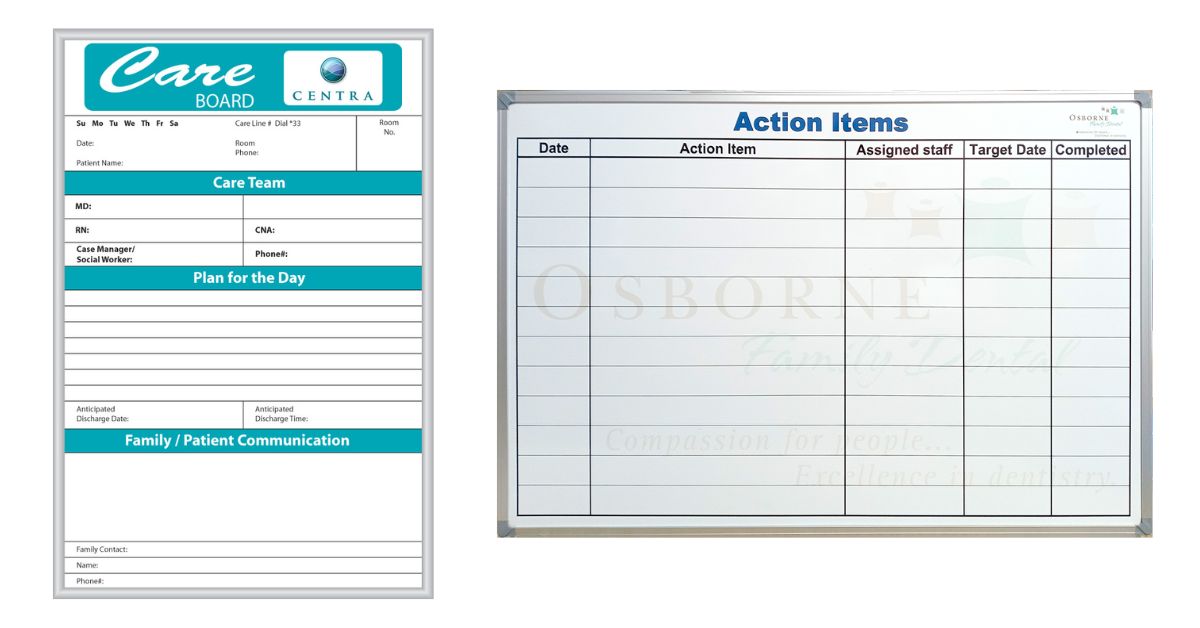
Custom-printed whiteboards are also valuable; they can be pre-printed with templates for safety checks, group schedules, or patient tracking grids. This saves staff time drawing lines and ensures data is consistently organized.
Fostering Patient Autonomy and Self-Expression
For patients, particularly in inpatient settings, a sense of control is often lost. Adding whiteboards in patient rooms or common areas can help patients in expressing themselves.
Art Therapy and Creative Expression
Whiteboards in common areas can become communal art spaces. Patients can draw, write poetry, or leave positive messages for one another. This form of spontaneous art therapy can be incredibly therapeutic, allowing for non-verbal emotional expression. It also helps build a sense of community within the unit, as patients engage with each other’s creations.
Low-Cost, High-Impact Tool
Implementing these visual tools requires thoughtful consideration of placement, safety, and purpose. However, their versatility makes them a low-cost, high-impact addition to any therapeutic setting. The humble whiteboard supports the core mission of mental health care: communication, safety, and healing.
By integrating them effectively, clinics can create environments that are more organized for staff and more empowering for patients. The benefits of whiteboards in mental health clinics ultimately lie in their ability to make the invisible visible, creating clarity in a world that can often feel confusing.
At Magiboards USA, we understand that every mental health care setting has unique needs. That’s why we offer a fully customizable hospital dry-erase board to complement your therapeutic environment perfectly. Our boards are designed to be a versatile and reliable addition to your clinic, supporting the vital work you do in communication, safety, and healing. Contact us today to learn how our customizable whiteboards can enhance your practice.