

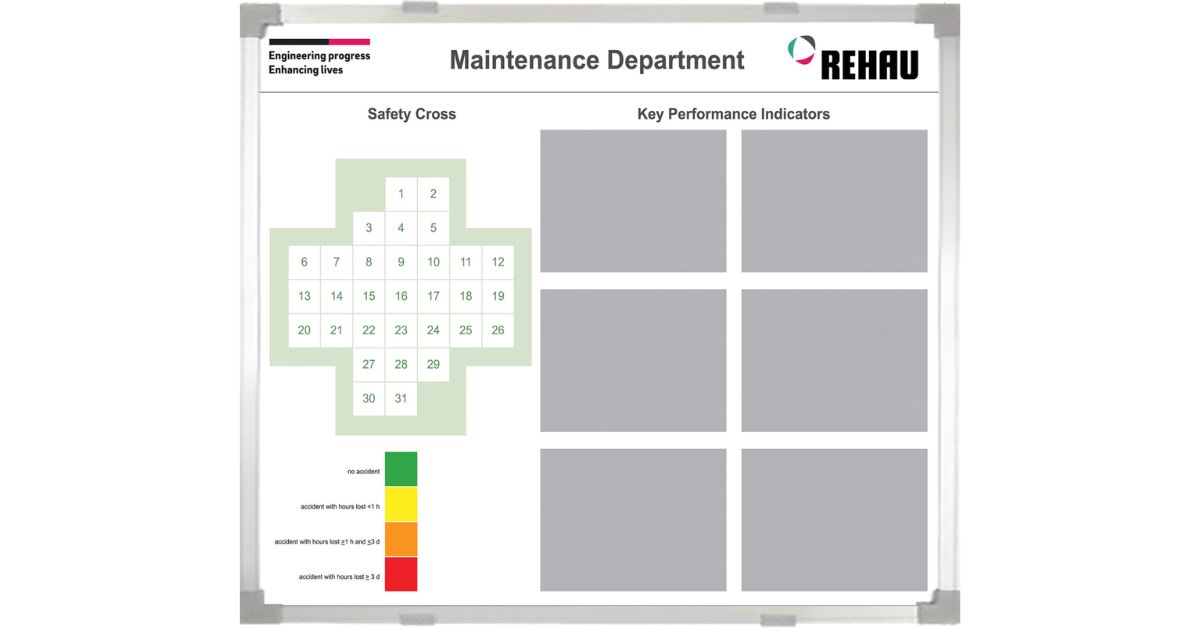
Teams often implement visual management tools and methodologies, such as Kaizen, to improve daily work. Then the board sits still, updates fall behind, and the team stops paying attention to it.
On the factory floor, a board should help people respond to recurring issues and follow improvement work from identification through results. When teams use it well, the board supports kaizen as an everyday practice inside production. Here are a few tips for using kaizen problem-solving boards.
Use the Board at the Point of Production
A kaizen board should live where the work happens. In lean manufacturing, teams need to connect improvement activity to the line or department where the problem appears. If the board sits in an office or conference room, it becomes a management review surface instead of a daily tool for operators and supervisors. Keeping the board near production makes it easier to post issues in real time and discuss them while the process is still visible.
Location Changes the Way the Board Gets Used
A board on the floor invites frequent updates and quick conversations. Teams walk past it during the shift, so it remains part of the day’s rhythm. A board tucked away from production, on the other hand, usually gets updated less often and reviewed too late. In lean manufacturing, timing affects usefulness.
Build the Board Around Common Lean Problems
A general-purpose whiteboard will not always support kaizen work very well. Lean teams need a structure that reflects the production issues they actually face, such as downtime, overproduction, or rework. A better board layout gives each issue a place for the problem and the result. This turns the whiteboard into a process tool rather than a note surface.
The board should also align with the team’s scope. A fabrication cell may need a tighter layout focused on machine uptime and material flow, while a broader department board may need space for staffing and line balance concerns. A custom-printed whiteboard often works better because it provides the team with a repeatable structure that aligns with the lean process they follow every day.
Write in Terms of Waste and Process Gaps
In lean manufacturing, kaizen begins with a clear view of waste. A board entry should describe what is happening in the process and why it creates a delay. Vague wording, such as “line is inefficient,” does not help much because it does not show where the waste appears. Better entries tie the problem to a specific gap in flow, changeover, material handling, or standard work.
For example, instead of writing “assembly falls behind,” a stronger entry might explain that operators at Station 3 wait several minutes per cycle for parts because replenishment from the previous staging area arrives late. That gives the team something they can observe and measure.
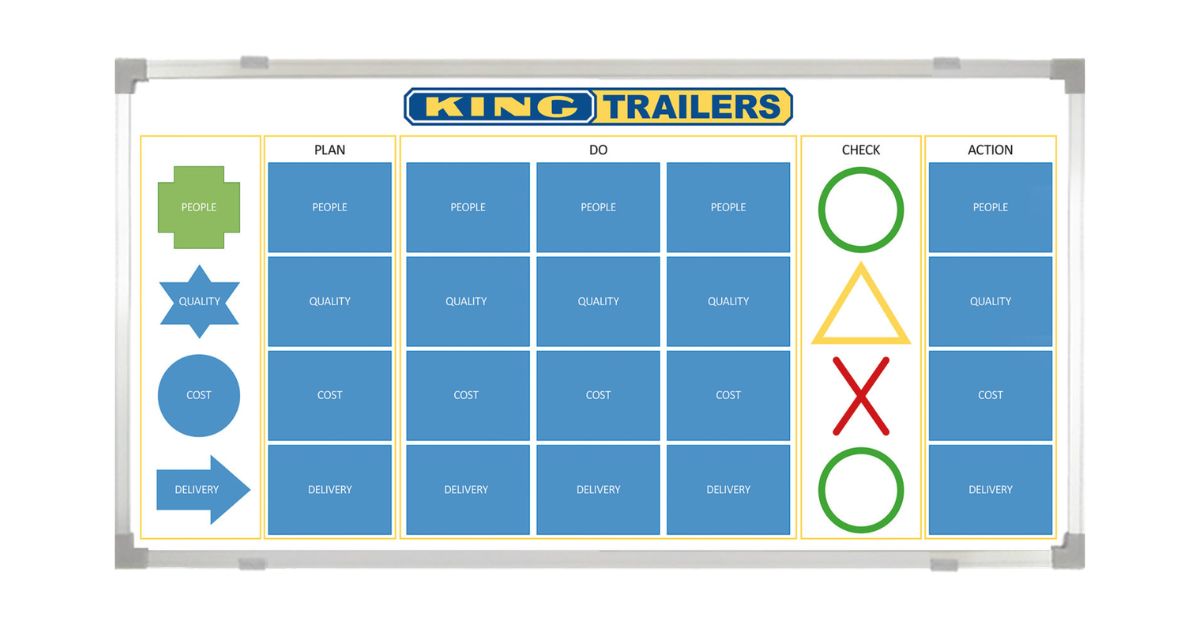
Use the Board During Daily Lean Huddles
A kaizen problem-solving board works best when the team reviews it every day. Lean manufacturing already depends on short, focused floor meetings to align around safety and production issues. The whiteboard should support that routine by giving the team a live view of active problems, countermeasures, and next steps. This keeps improvement work connected to daily production instead of pushing it into occasional project meetings.
During the huddle, the team should not simply read the board out loud. They should use it to clarify which items need support and which need another round of observation.
Daily Review Keeps the Board Honest
Boards lose value when teams only revisit them during audits or monthly reviews. Problems age, due dates slip, and action items stop moving. A daily huddle creates accountability without adding much overhead. It also helps supervisors remove obstacles before they further slow down improvement work.
Focus on Root Cause
Lean teams sometimes move too quickly from issue identification to corrective action. That creates short-term fixes that deal with the symptom while leaving the real cause in place. A kaizen board should make room for root cause thinking before the team decides what to change. Without that step, the same issue often returns under a slightly different label.
A simple root cause section on the whiteboard can go a long way. This does not need to become a formal exercise every time. It just needs to slow the team down enough to solve the right problem.
Keep the Number of Active Items Limited
A crowded board may look busy, but it usually signals weak prioritization. Lean teams get more value when they focus on a manageable number of issues with real impact on safety, quality, or labor efficiency. If every frustration goes onto the board at once, nothing gets enough attention to move.
Signs the Board Has Too Much in Motion
Some patterns often appear when the board takes on more than the team can realistically handle. Here are a few signs the board has too much work in motion:
- Too many open items have no clear owner
- Due dates pass without updates
- Huddles focus only on new issues
- Similar problems keep reappearing
- Countermeasures stay vague
- Closed items show no measured result
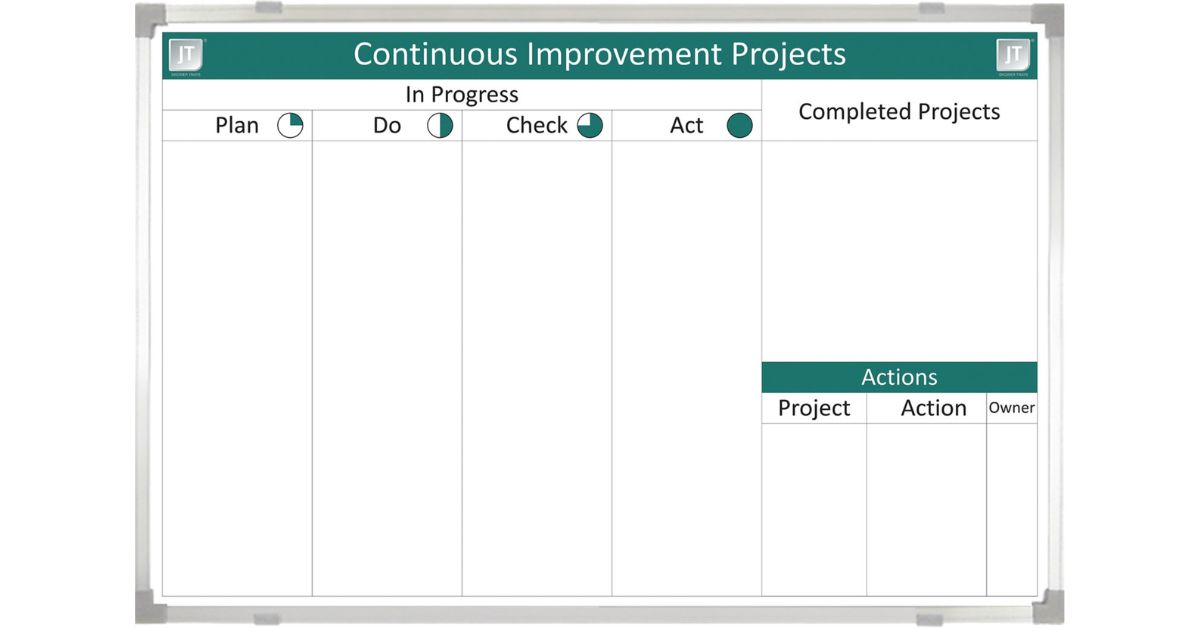
Choose a Layout That Supports Kaizen Methodology
Whiteboards used for kaizen should fit the team’s actual improvement rhythm. A board for one production cell may need simple sections for issue tracking, root cause, action, and result. Meanwhile, a department-level board may need more room for trend visibility and cross-functional support. The best layout depends on how the team runs lean daily management.
Custom-printed whiteboards often make this easier by eliminating the need to redraw the same structure repeatedly. Teams can walk up to the board and know exactly where to place an issue and where to review outcomes. That consistency reduces friction.
Keep It Clear Enough to Use Under Pressure
Production teams do not have time to decode a complicated board. The layout should feel readable at a glance. Too many boxes or labels can slow people down, and in lean manufacturing, a tool should support action with as little friction as possible.
Turn Whiteboards Into a Daily Kaizen Tool
The most useful tips for using kaizen problem-solving boards come back to one idea: the whiteboard should help lean manufacturing teams improve the process where the work happens. When the layout fits the team’s workflow, and the review rhythm stays consistent, the board becomes a practical tool for implementing kaizen on the floor. That is where whiteboards move beyond communication and start supporting real, continuous improvement.
Magiboards USA offers lean manufacturing whiteboards fully customized to your needs, helping your team bring kaizen into daily production with a clearer visual system for tracking waste and keeping improvement work tied to the floor. Explore our samples today and let us create the perfect tool for your workflow.